.png)


Chopin Ballade – Lecture Recital Series by Tiger Han

Updated: May 19
In this part of the lecture recital, I introduce Chopin's Ballade, one of the most distinctive and imaginative forms in piano literature. Unlike dances or traditional classical forms, the Ballades are musical narratives. They unfold like stories, shaped by shifting moods, dramatic contrasts, and evolving musical characters.
These works are among the most dramatic piano pieces written by Frédéric Chopin. Rather than following a predictable structure, they move through moments of tension and release, lyricism and conflict, reflection and climax. Each section feels like a new chapter in a larger musical journey.
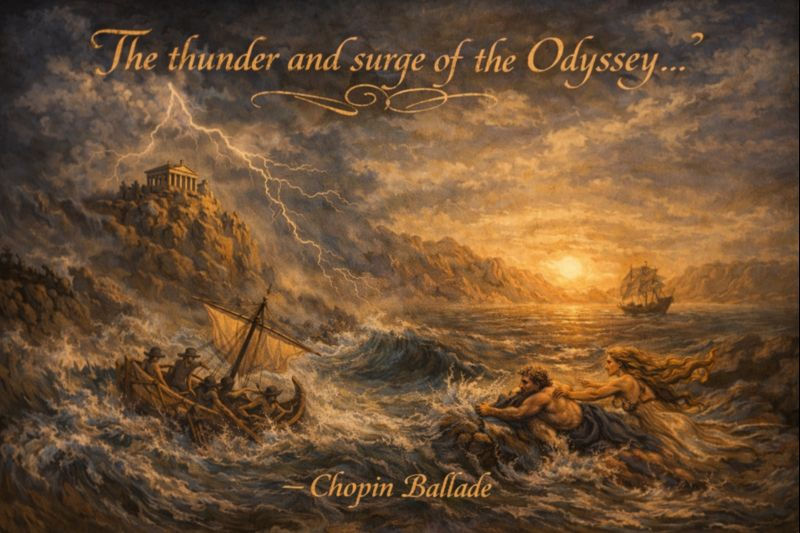
The writer Andrew Lang once described the First Ballade as containing “the thunder and surge of the Odyssey,” invoking the epic storytelling of Odyssey. This comparison captures how the Ballades transcend pure technique and enter the world of narrative imagination.
I particularly enjoy playing this Ballade because of the constant transformation within a single piece. The emotional world can shift suddenly from lyrical calm to dramatic urgency and this sense of unfolding story makes every performance feel alive and unpredictable.
The Chopin Ballade Featured in This Recital
The Ballade in G minor Op. 23 by Frédéric Chopin is one of the most challenging and deeply loved works in the piano repertoire. It begins quietly and mysteriously, almost like the opening of a story whispered to the listener, before unfolding into moments of extraordinary power and intensity. Legend suggests Chopin drew inspiration from Polish poetry describing heroes, battles, and national struggle, and throughout the piece one can hear this sense of drama: darkness set against light, despair against hope, and reflection against defiance. These contrasts give the Ballade its unique narrative force and emotional depth. (see Chopin: The Man and His Music by James Huneker)


Comments